Moroccan Mint Tea: History, Ritual and Café Culture
In Morocco, tea is much more than a drink. It’s how a shopkeeper welcomes you into a carpet shop, how a family greets guests, and how friends pass an afternoon. Sweet, fragrant and poured with a flourish, Moroccan mint tea is the country’s most famous gesture of hospitality, and something every visitor will be offered sooner or later.
Here’s what to know about Moroccan mint tea, how it’s prepared and served, and how to enjoy Morocco’s lively café culture.
At a glance
- Main ingredients: Chinese green tea, fresh spearmint, sugar
- Served: several times a day, and always to guests
- Coffee to try: café nous-nous (half coffee, half milk)
- Etiquette: accept at least one glass when offered
A short history of Moroccan tea
Tea isn’t native to Morocco. Although stories of earlier diplomatic gifts exist, the most widely accepted account is that green tea became widespread in the mid-19th century, when British merchants brought Chinese green tea, especially the “gunpowder” variety, to Moroccan ports such as Tangier and Essaouira. Moroccans added fresh mint and sugar, and a national tradition was born. Today the habit is shared across North Africa, but the Moroccan version remains the best known.
How Moroccan mint tea is made
The classic recipe uses just three ingredients:
- Green tea, usually Chinese gunpowder tea
- Fresh spearmint, called nana, generous handfuls of it
- Sugar, often a lot, though you can ask for less
The tea is first rinsed with a little boiling water to remove bitterness. Then mint, sugar and more water are added, and the pot is brought back to a simmer. The host pours a glass and returns it to the pot several times to mix the tea, before serving.
Why is it poured from a height?
Pouring from high above the glass cools the tea slightly, mixes it and creates a light foam on top, a sign of a well-made tea. It’s also part of the show, and skilled pourers rarely spill a drop.
Tea etiquette for visitors
- Accept when offered. Refusing tea can seem impolite. If you don’t want much, accept a glass and sip slowly.
- Expect more than one glass. Tea is often served in three rounds. A popular saying describes the first glass as gentle as life, the second as strong as love and the third as bitter as death.
- Hold the glass by the rim. The glasses are hot and have no handles.
- It’s fine to ask for less sugar. Just say so before it’s poured.
- Tea in shops doesn’t oblige you to buy. Enjoy it, chat, and leave politely if nothing catches your eye.
Learn more about local customs in our guide to Moroccan etiquette.
Morocco’s café culture
Morocco’s cafés are social hubs, especially for men in traditional neighborhoods, though in big cities mixed and modern cafés are everywhere. Chairs often face the street, and a single coffee can last an hour.
What to order:
- Café noir: strong black coffee, often espresso-style.
- Café nous-nous: “half-half”, coffee with an equal amount of milk, served in a glass.
- Thé à la menthe: mint tea, of course.
- Fresh orange juice: cheap and delicious in winter and spring.
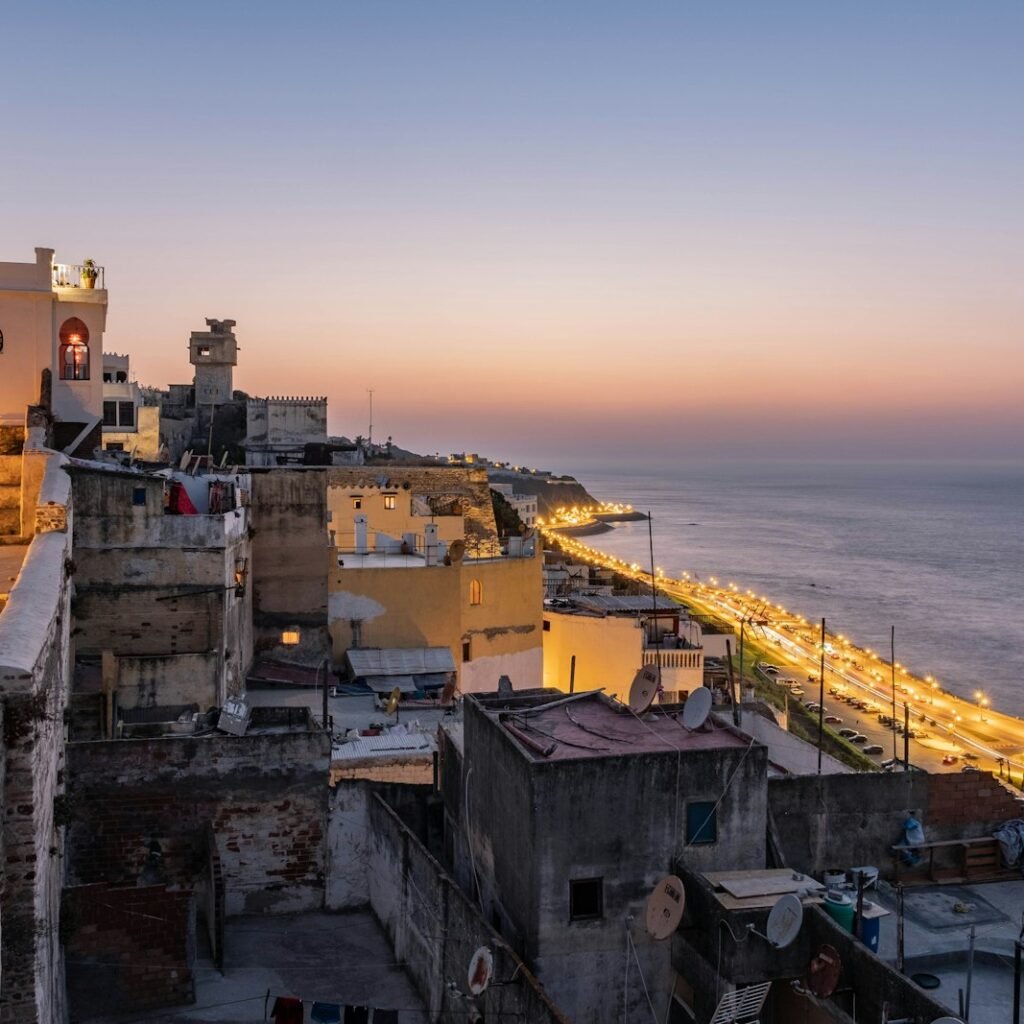
Tangier has some of Morocco’s most atmospheric cafés, including Café Hafa, which has overlooked the Strait of Gibraltar since 1921. Read more in our Tangier travel guide.
Where to experience Moroccan tea traditions
- With a family, for example on a village visit in the Atlas Mountains
- During a cooking class, where you’ll often learn to make tea alongside tagine
- In a medina café or on a riad roof terrace at sunset
- In the Sahara, where tea around the fire is part of the evening ritual
Frequently asked questions
Is Moroccan mint tea caffeinated?
Yes. It’s made with green tea, so it contains caffeine, though usually less than coffee.
Can I buy Moroccan tea to take home?
Yes. Gunpowder tea, traditional teapots and glasses are easy to find in the souks. Fresh mint is best bought at home.
Is it rude to refuse tea in Morocco?
It’s polite to accept at least one glass. If you really don’t want any, a warm smile and a thank you (shukran) are understood.
Taste Morocco with a local
Tea ceremonies, cooking classes and food tours can be built into any of our Morocco tours. Tell us what you’d love to taste, and we’ll plan it with you.
Pingback:Tangier Travel Guide: Things to Do and Where to Go